
Drumathon – Four Hours of Drumming for Charity
Drumathon: Four Hours of Rhythm for Charity
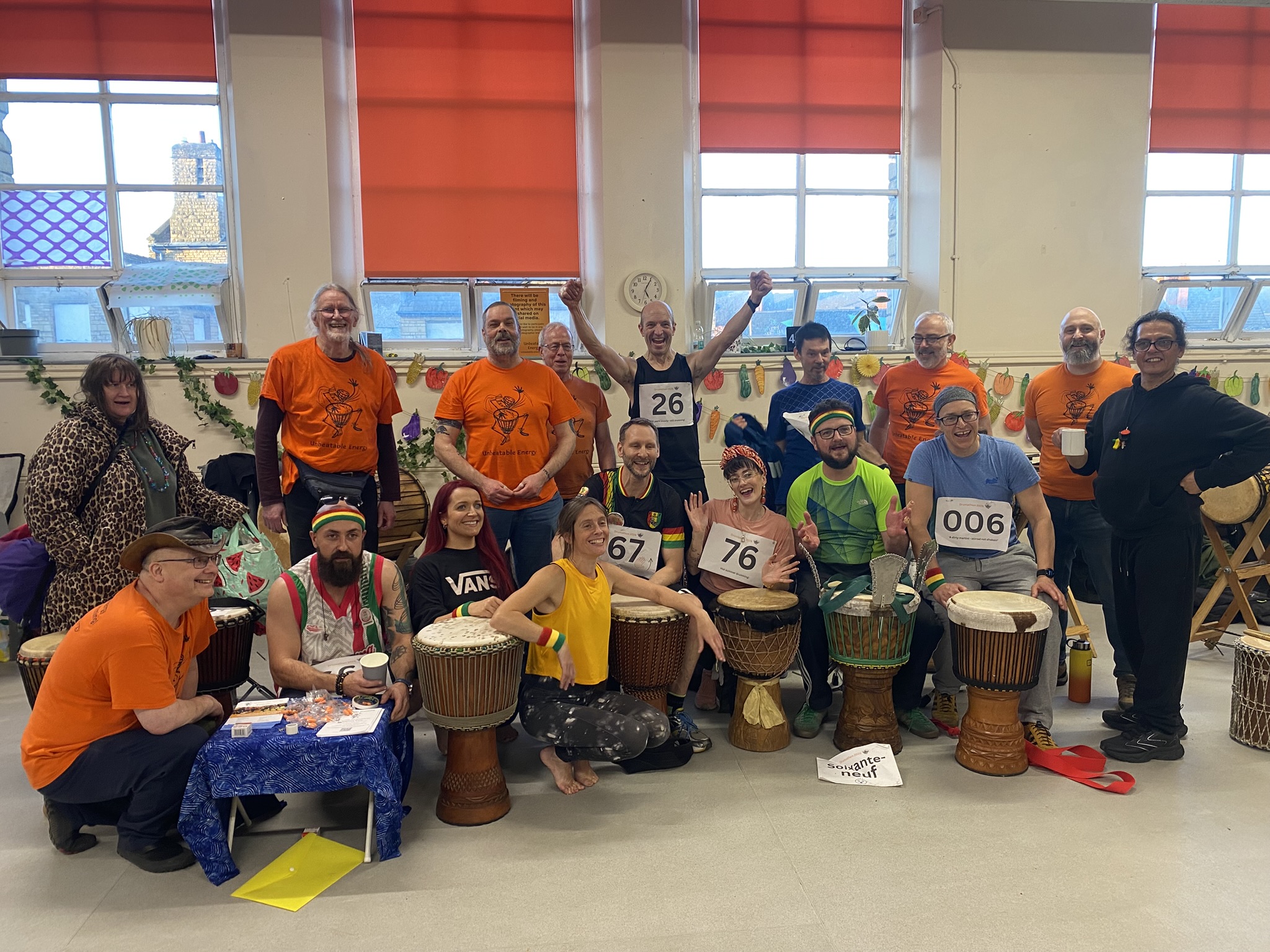
The Moment It All Locked In
Somewhere during the afternoon there was a moment when everything clicked.
The rhythm had been flowing for quite some time. Drummers were completely absorbed in the groove. People in the room were smiling, listening, responding to one another — and the music seemed to take on a life of its own.
That’s the thing about rhythm when it’s shared like this. It stops feeling like individual players making sounds and starts to feel like one living pulse moving through the room.
For a few minutes, it felt as though the whole space was breathing together through the drums.
Those are the moments that remind you why music matters.
Four hours of drumming…
No breaks in the rhythm. No dropping out of the groove.
That was the challenge behind ‘Drumathon’, a fundraising drumming event I created to support the charity Project 6, which helps people rebuilding their lives after drug and alcohol addiction.
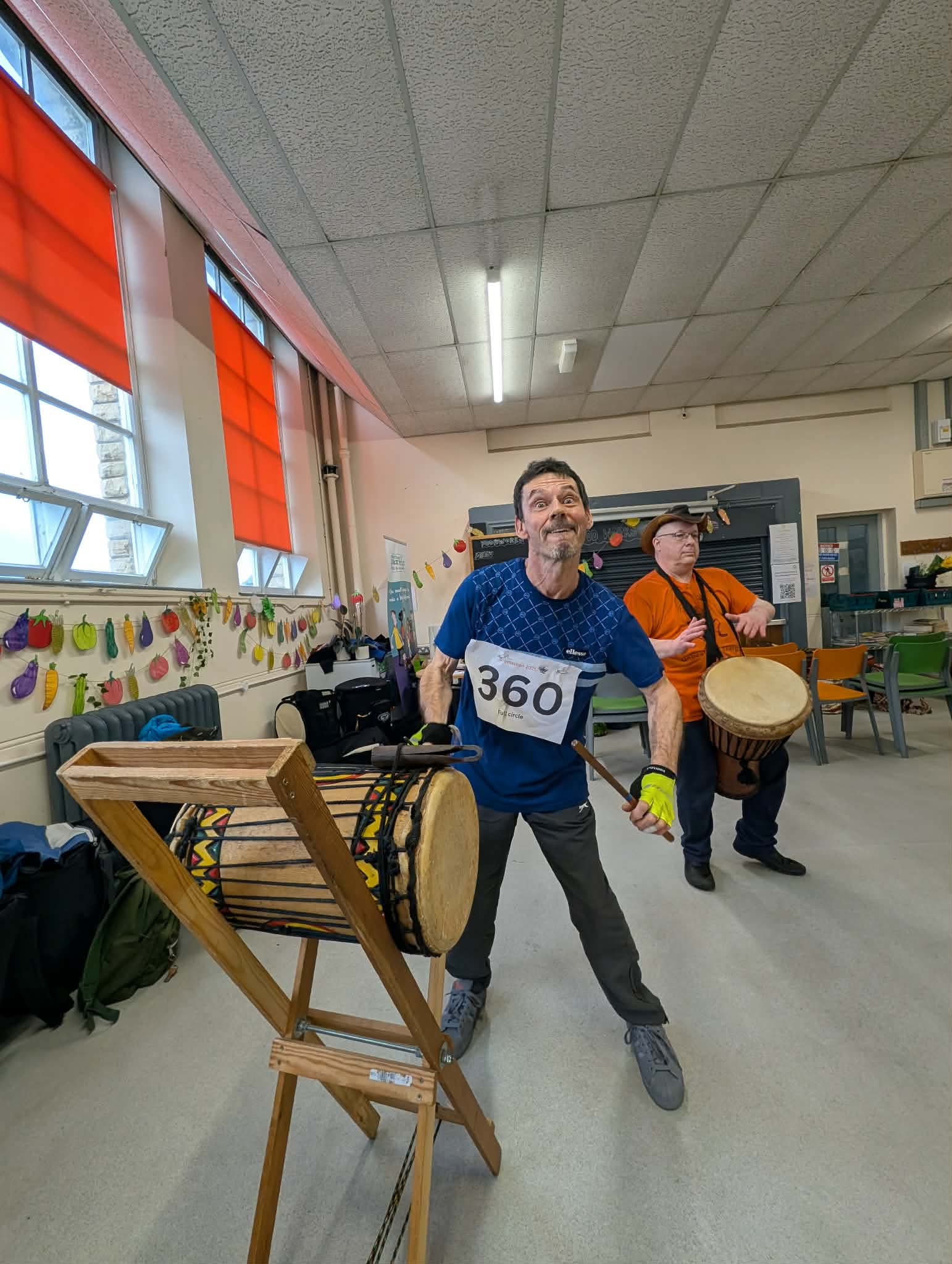
On Saturday, I took on that challenge together with some musician friends, keeping the rhythm going for four continuous hours while other drummers joined in throughout the afternoon.
By the end of the event, not only had the rhythm held strong — we had also raised over £1,000 for the charity.
But the numbers only tell part of the story.
From Idea to Reality
A few weeks ago, I wrote a blog announcing the idea for Drumathon and inviting people to be part of it.
At that stage it was still just a thought: could we bring our drumming community together and keep the rhythm going for four continuous hours?
African drumming has a remarkable way of drawing people into the moment. Once the groove settles in, players begin to listen more closely to each other. Rhythms start to interlock, energy builds, and the room begins to feel like a shared musical space rather than just a group of individuals.
What I hoped for was a room full of rhythm and community spirit.
What actually happened was even better.
A Room Full of Rhythm
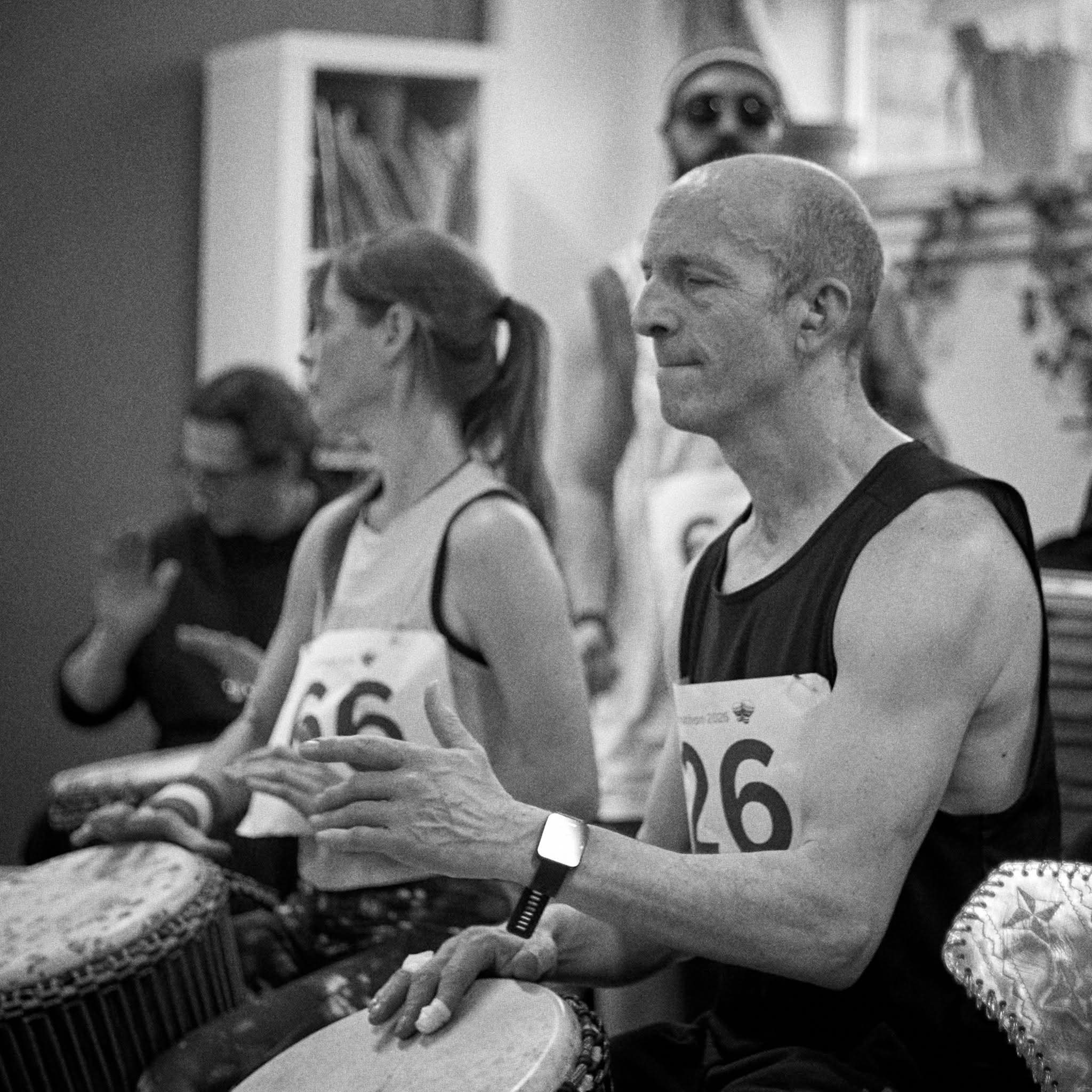
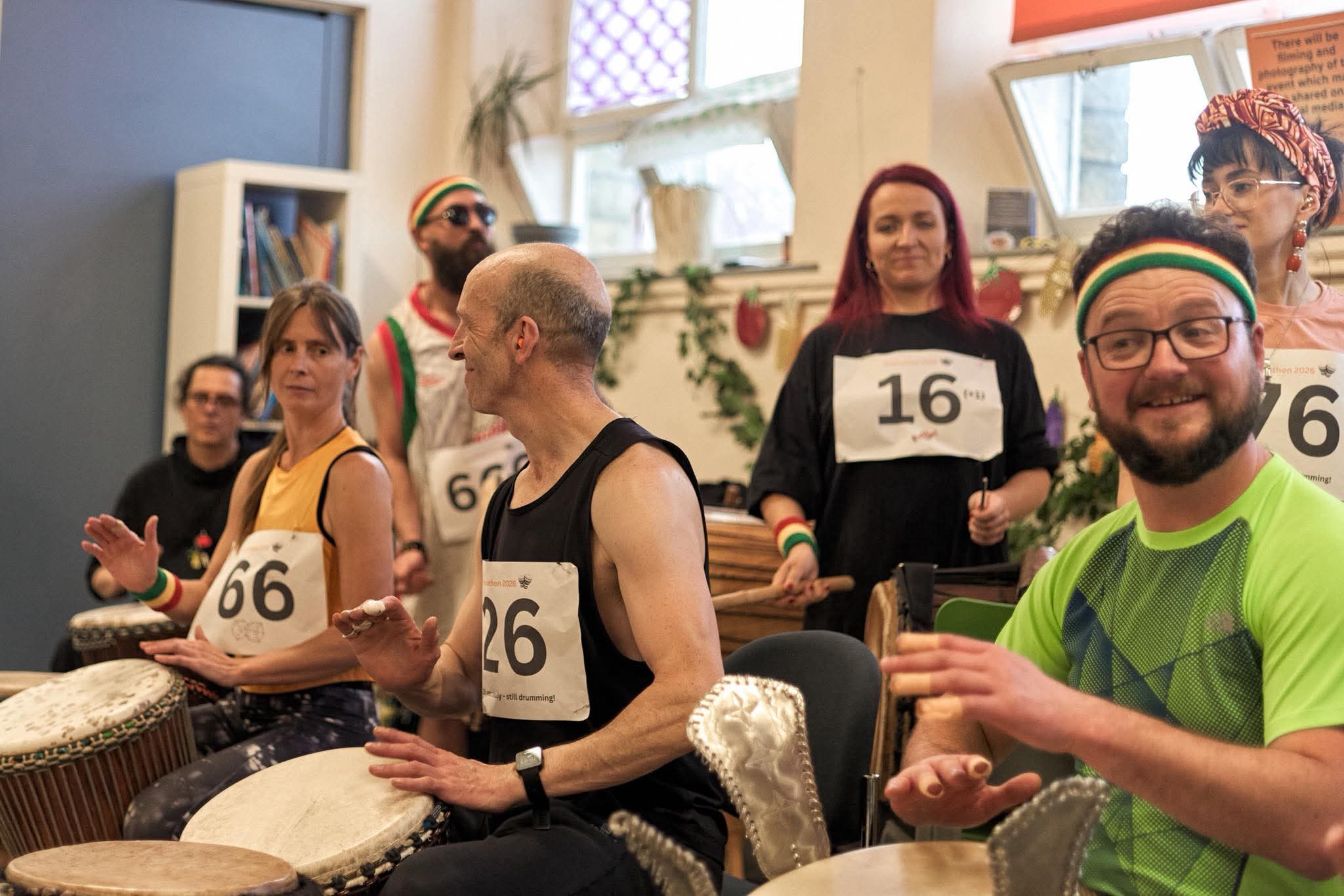
Throughout the afternoon the rhythm never stopped.
Different players stepped forward to lead sections, introducing new grooves and guiding the group through changing patterns. Some rhythms were powerful and driving. Others settled into deep, hypnotic grooves where everyone locked into the pulse together.
African drumming is at its best when it’s shared.
Each drum part has its role — bass patterns anchoring the rhythm, accompanying parts weaving together, and lead drums adding expression and variation.
No single drum carries the music on its own.
And that was exactly the spirit of Drumathon. The four-hour rhythm was held together by a core group of players, while others joined in, supported the groove and brought their own energy into the room.
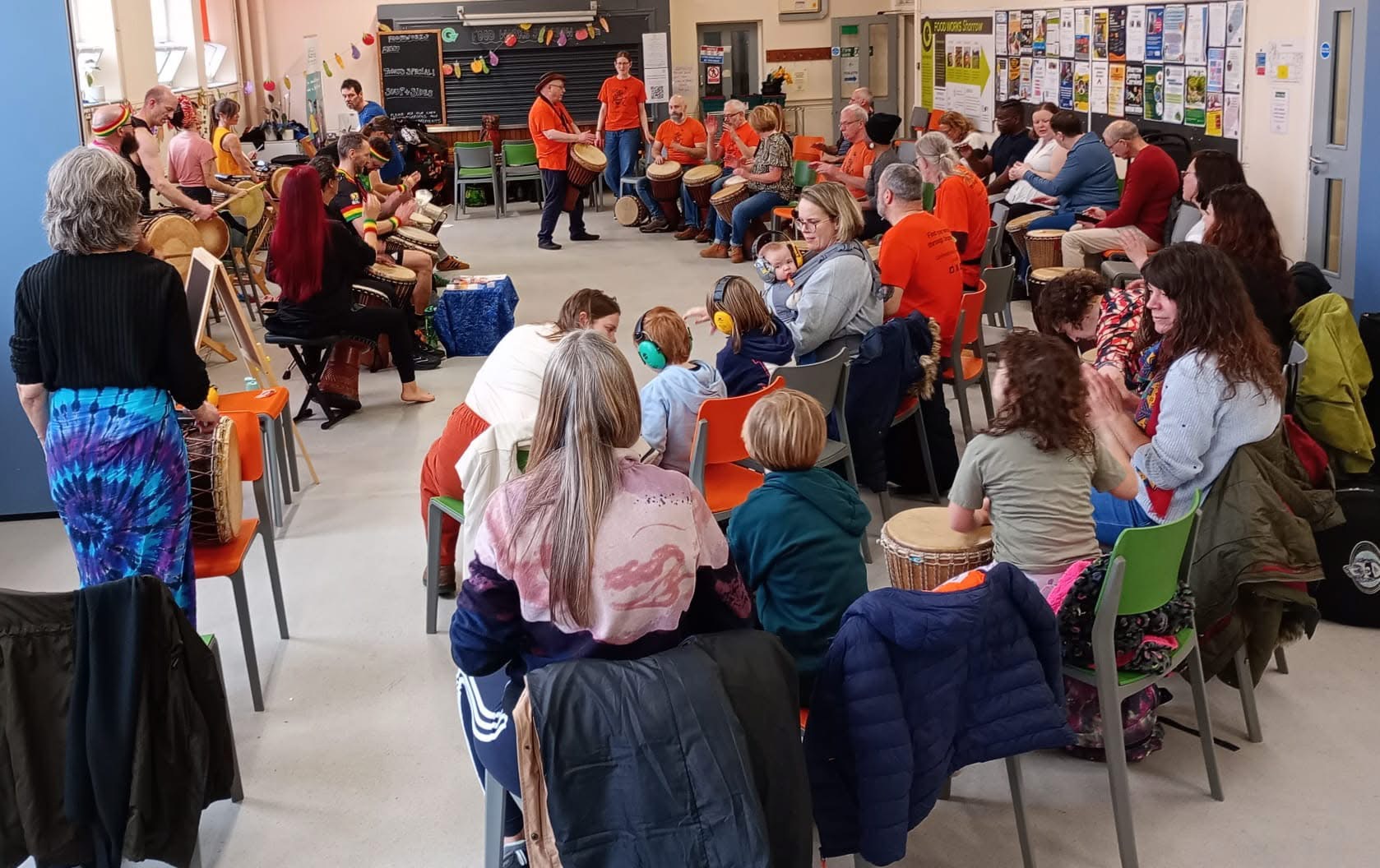
The People Who Made It Happen
Drumathon brought together an incredible mix of people.
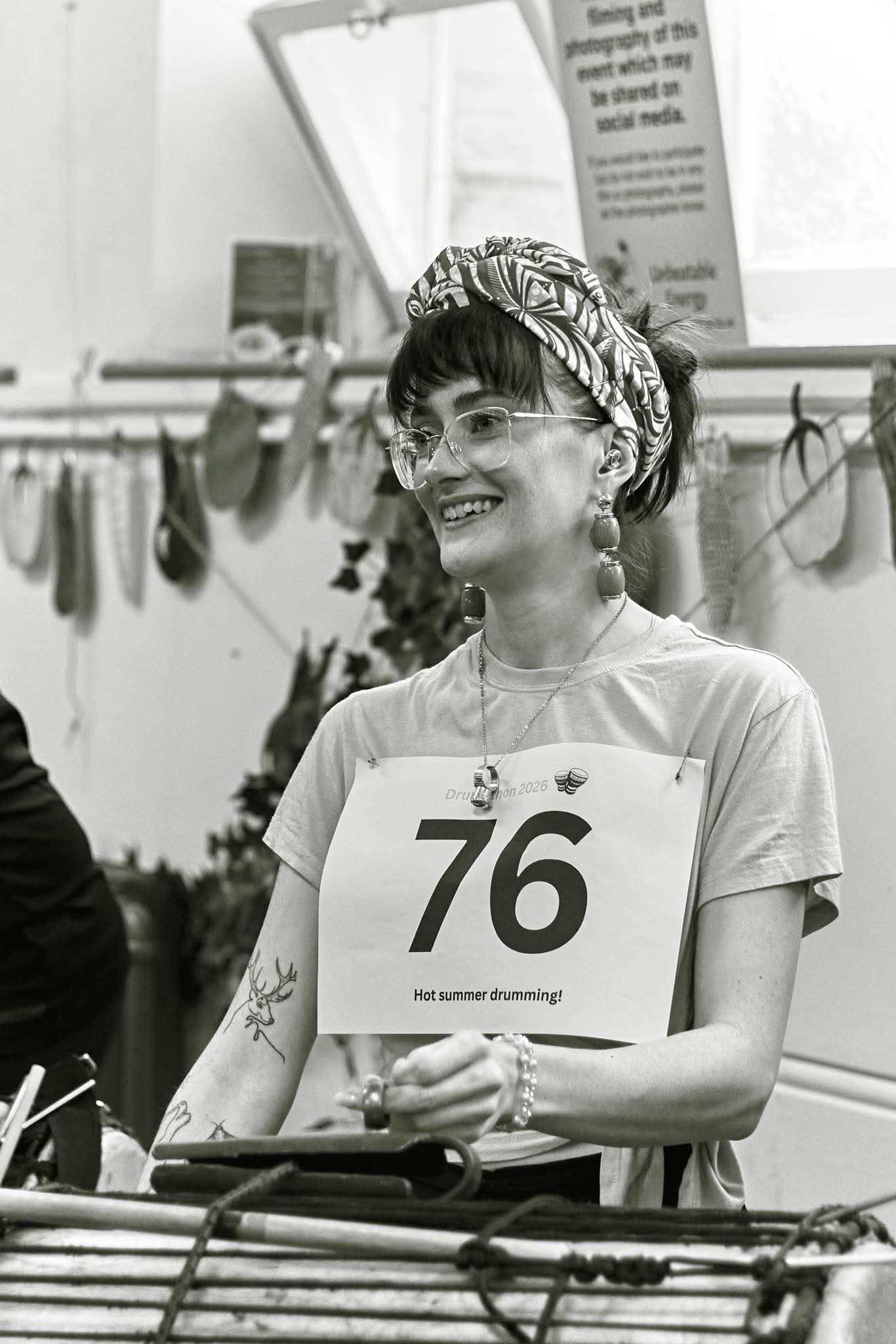
Members of our regular drumming classes were at the heart of the event, bringing their enthusiasm and musical energy into the room. We were also joined by guest musicians who came to support the challenge, and it meant a great deal that some people travelled from outside Sheffield to take part.
The atmosphere throughout the afternoon was something really special — focused when the rhythms deepened, joyful when the grooves lifted, and always full of encouragement for whoever stepped forward to lead.
Supporting Project 6
The reason for organising Drumathon was to raise money for Project 6, a charity doing vital work supporting people recovering from addiction.
Recovery journeys are rarely simple. They require resilience, support, and community.
Music cannot solve everything, but rhythm has an extraordinary ability to bring people together. When people sit in a circle with drums, something shifts — barriers soften, listening deepens, and connections form.
If Drumathon helped support the work Project 6 is doing, then the four hours of drumming were time very well spent.
What Drumathon Reminded Us
Events like this reinforce something I see again and again through the work we do at Unbeatable Energy.
When people sit together with drums, something changes.
People listen more closely. They respond to each other. They begin to find a shared pulse.
And once that shared pulse is there, the music becomes something bigger than any individual player.
That’s where the real magic of drumming lives.
Thank You
A huge thank you to everyone who played, donated, supported, or helped spread the word.
Drumathon started as a simple idea — a musical challenge to raise money for a good cause.
What it became was a celebration of rhythm, community, and the incredible energy that emerges when people come together through music.
And who knows… this might not be the last Drumathon.
Drumathon Legacy
If you would still like to support the fundraising effort for Project 6, donations remain open on the JustGiving page:
https://www.justgiving.com/page/african-drumathon
Every contribution helps support the important work they are doing for people rebuilding their lives after addiction.

Drumathon: Why I'm Doing It (and How You Can Be Part of It)
Drumathon: Why I'm Doing It (and How You Can Be Part of It)
Drumathon is a personal endurance drumming challenge I’m taking on to raise funds for Project 6, a Sheffield-based charity supporting people affected by drug and alcohol addiction.
Drumathon is a four-hour, non-stop African drumming challenge I’m taking on as both a personal endurance test and a community fundraising event. Playing continuously for that length of time is physically demanding and mentally focused — and that challenge is very much the point.
This project is rooted in my own journey. In my twenties, I struggled with drug and alcohol addiction, and African drumming became one of the things that helped me find structure, focus, and a way forward, alongside the support of other people. That’s why Drumathon is raising funds for Project 6, whose work supports people facing those same challenges today.
Drumathon isn’t just about endurance — it’s about rhythm, support, and bringing people together around something positive.
The short video below explains where the idea for Drumathon came from and what the challenge will involve.
Why Drumathon Matters to Me
African drumming has been part of my life for over three decades, but its role has gone far beyond music. During a difficult period in my twenties, when I was struggling with drug and alcohol addiction, rhythm became one of the things that helped me rebuild structure, focus, and a sense of direction — alongside the vital support of other people. I’m now 26 years clean and sober, and that journey continues to shape how and why I work with rhythm today.
Drumathon grows directly out of that experience. African drumming, with its grounding pulse, shared rhythms, and physicality, taught me the value of staying present and connected through challenge rather than stepping away from it. That’s why this project feels so closely aligned with Project 6, whose work centres on support, connection, and practical help for people affected by drug and alcohol addiction — the same combination of things that made a difference in my own life.
At its heart, Drumathon is about recognising that people don’t get through difficult periods on their own — and that rhythm, community, and encouragement can play a powerful role in that process.
A Shared Rhythm: How Drumathon Works on the Day
Drumathon will take place on:
Saturday 28th February 26 13:00-17:00 at
Sharrow Community Forum, The Old Junior School, South View Rd, Sharrow, Sheffield S7 1DB.
While I’ll be taking on the challenge of four hours of continuous African drumming, the event itself is designed as a community drum circle. People are warmly invited to come and join the drumming, play accompaniment rhythms alongside me, and help carry the energy of the four-hour journey.
Throughout the event, we’ll be supporting participants with simple, accessible African rhythms, and everyone is welcome to play for as long or as little as they like. Some people may dip in briefly, others may stay longer — all of it contributes to the shared experience. Drumathon is about collective rhythm, encouragement, and togetherness, using African drumming as a way to bring people together while raising funds for Project 6.
How You Can Support Drumathon
There are a few simple ways you can support Drumathon and help make the event a success.
If you’d like to sponsor the challenge, you can make a donation via the JustGiving page. All funds raised will go to Project 6, supporting their work with people affected by drug and alcohol addiction.
You’re also very welcome to come along on the day, join the drumming for as long or as little as you like, and be part of the shared rhythm and atmosphere. Every person who plays, listens, or brings encouragement helps carry the energy of the four-hour journey.
And finally, sharing Drumathon — with friends, family, colleagues, or on social media — makes a real difference. The more people who know about it, the more support we can generate for the charity and the wider community.
Thank you for being part of it.

The Soli Pathway: A Step-by-Step Journey Through the 12/8 Djembe Feel (Weeks 1–9)
The Soli Pathway: A Step-by-Step Journey Through the 12/8 Djembe Feel (Weeks 1–9)
Over the past months I’ve been developing a structured series to explore one of the most important foundations in West African djembe playing: the 12/8 feel, and the way it shapes flow, timing, and musical vocabulary.
If you’re enjoying my drumming tutorials and want to support future videos, you can buy me a coffee. Every contribution helps keep the rhythm going!
The Soli Pathway – Weeks 1–9
This first series focuses entirely on the Soli Pathway: a grounded, flowing version of the 12/8 feel that influences how phrases land, how the groove moves, and how your hands begin to relax into the music.
A second series will follow later, exploring the other 12/8 pathway.
These videos build one step at a time.
Each week adds a new layer.
Each groove prepares your hands, ears and instincts for what comes next.
This blog brings together Weeks 1–9 of the Soli Pathway in one place so you can follow the series from start to finish.
(Week 10 — The Big One — has its own dedicated blog coming next.)
So grab a drum (or a table!) and enjoy the journey.
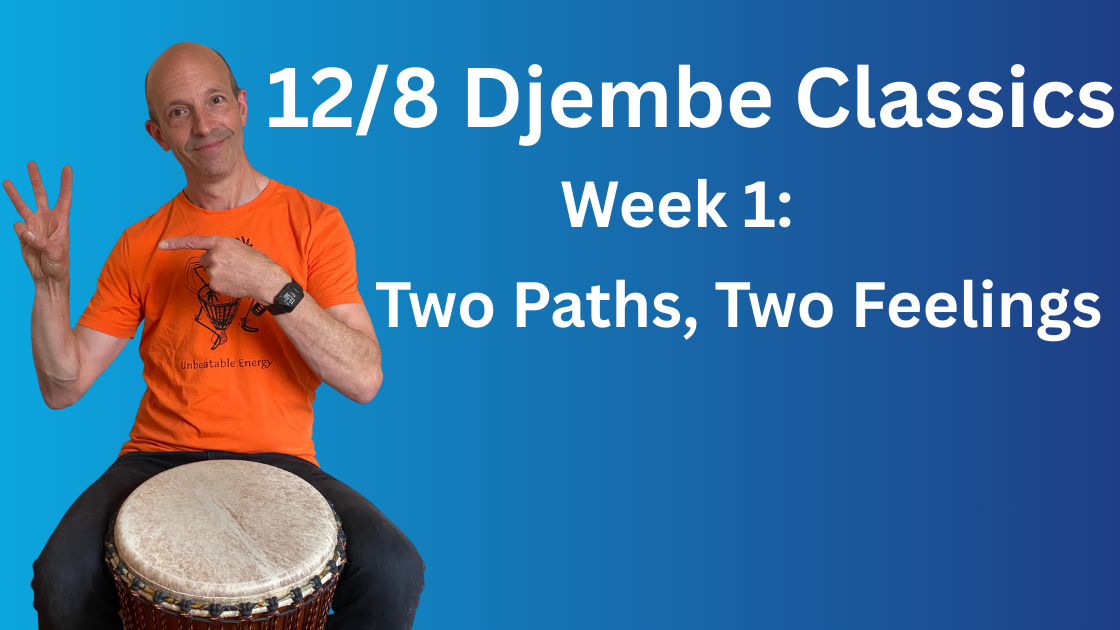
WEEK 1 — Two Paths, Two Feelings
This first lesson sets the whole pathway in motion.
We explore the two different “roads” inside the 12/8 feel — something that’s easy to overlook but completely changes how a rhythm sits in the body.
It’s a gentle start, but it gives you the foundation you’ll use in every video that follows.
→ When you’ve explored these two feelings, you’re ready for the next step.
WEEK 2 — ‘Kanki Ta’ – Essential Groove & Hidden Feel
“Kanki Ta” is one of the simplest ways into the ternary world, but it already carries the character of the Soli Pathway. In this lesson, I explore how the short–medium–long swing shapes the rhythm, and how that internal shift changes its feel.
Beginners can focus on coordination; more experienced players can listen for the subtle movements inside the groove.
WEEK 3 — Feel the Pinch (‘Katikita’ Breakdown)
Here we explore Katikita — a groove with a beautifully “pinched” inner feel created by accents and timing.
This lesson shows how small shifts can give the rhythm shape and character, especially within the Soli Pathway where subtlety matters.
It’s not about adding notes; it’s about adding life.
WEEK 4 — Three Flowing Grooves from Kala
In this video we explore Kala — a joyful rhythm from the Soli family. The lesson looks at three accompaniment patterns that share the distinctive before-the-beat feeling often found in Soli-style grooves.
It’s a flowing set of patterns that helps bridge the earlier material with the more challenging ideas still to come.
WEEK 5 — Garangedon
Garangedon is a traditional rhythm associated with the shoemakers’ caste in Mali, and the version here comes through Mamady Keïta, who brought it into the wider djembe repertoire from Guinea.
What makes it so compelling is the way it captures the Soli Rapide feel — that slight lean before the pulse, creating the suspended, rolling swing that defines so much of this pathway.
In the video we break down the key accompaniment phrase and look at how this subtle shift gives the rhythm its characteristic energy and flow.
WEEK 6 — Joining Up the Djembe Dots
This video picks up directly from Garangedon, exploring a small variation on that groove and tracing how the same before-the-pulse accent appears across other djembe and dundun patterns.
It’s a useful rhythmic touchpoint that shows how the Soli pathway connects so many grooves in the 12/8 family. The aim here is to join up the djembe dots — to hear how this shared feeling flows through melody, rhythm and pulse.
WEEK 7 — Setting the Groove Free
This video takes the Garangedon-inspired ideas from the previous section and begins to loosen them. Up to now we’ve joined the dots between variations; here the focus shifts to avoiding getting stuck in any one version.
Once the classic accent-before-the-beat feeling is in your hands, you can start adding phrases, changing sounds and introducing small spontaneous shifts that move the rhythm toward solo phrasing.
It’s about keeping the same pulse but opening space for expression and play — letting the pattern feel alive rather than fixed.
WEEK 8 — Bass, Flow & Freedom
This video continues directly from the previous section, but now the focus shifts to how bass placement can deepen and open up the groove. Subtle changes in where the bass lands begin to transform the accent-before-pulse feel we explored earlier, creating new levels of flow and freedom.
We’re still inside the 12/8 pocket, but this session takes things further — offering more ways to connect your phrases, ride the groove and begin to improvise with confidence.
WEEK 9 — Liberté Doubles
This video uses the rhythm Liberte as a bridge toward the more complex Soli-style accompaniment that follows. Although not a Soli rhythm, it offers a clear framework for developing the in-between doubles — the quick hand-to-hand notes that sit between the main pulse.
These doubles appear often in Soli-style grooves, so this session focuses on the timing and feel that make that movement easier to control.
What Comes Next? Week 10 — The Big One
Weeks 1–9 form a complete introduction to the Soli Pathway — one side of the 12/8 world.
Week 10 is where everything comes together.
It’s the longest, most detailed lesson in the series and the one that has resonated most with viewers so far. Because of its importance, it has its own dedicated blog post, which will be live shortly.
If you’ve made it this far, you’re more than ready for the final step — keep an eye out, Week 10 is on its way.
Sharing the journey
I’m always exploring new ways to develop solo phrasing and technique — and this roll has been a really enjoyable challenge. Sharing these ideas through video is part of how I keep the learning alive and offer something that others might find useful or inspiring in their own playing.
If you’d like to support the channel and help keep the rhythm flowing, you can buy me a coffee here:
https://buymeacoffee.com/unbeatableenergy
Thanks for reading — and happy drumming!
-Steve Rivers
If you’re enjoying my drumming tutorials and want to support future videos, you can buy me a coffee. Every contribution helps keep the rhythm going!


Remembering Mamady Keïta: Djembe Rhythm ‘Kaloo’ and the Legacy of West African Percussion
Remembering Mamady Keïta: Djembe Rhythm ‘Kaloo’ and the Legacy of West African Percussion
Earlier this month marked the anniversary of Grand Master Mamady Keïta’s passing. In honour of his extraordinary contribution to West African drumming, I’ve shared a new video exploring one of his later compositions — the beautiful rhythm Kaloo.
Mamady is said to have dreamed this rhythm and developed it during his time in San Diego in the early 2000s. I first learnt Kaloo directly from him in 2009, and later revisited it during a workshop in Senegal in 2010 (originally due to be taught by Mamady himself, but led instead by Seckou Keita after Mamady became unwell).
If you’re enjoying my drumming tutorials and want to support future videos, you can buy me a coffee. Every contribution helps keep the rhythm going!
Exploring Kaloo – Djembe, Dunduns & Multitasking
In this new video, I walk through Kaloo’s djembe and dundun parts, slowly unpacking the structure and phrasing. After demonstrating the dunduns, I have a go at one of my favourite challenges: playing and singing at the same time – a playful way to internalise the arrangement and help others feel how the layers fit together.
If you’ve played Kaloo before, I’d love to hear how and where you learnt it. And if it’s new to you, I hope this helps bring you closer to Mamady’s rich and vibrant musical world.
Sharing the journey
I’m always exploring new ways to develop solo phrasing and technique — and this roll has been a really enjoyable challenge. Sharing these ideas through video is part of how I keep the learning alive and offer something that others might find useful or inspiring in their own playing.
If you’d like to support the channel and help keep the rhythm flowing, you can buy me a coffee here:
https://buymeacoffee.com/unbeatableenergy
Thanks for reading — and happy drumming!
-Steve Rivers

Consistency Counts
Consistency Counts
It’s shaping up to be a really positive season for Unbeatable Energy.
- We’ve just delivered a fantastic Afro-Samba Drum Circle with Apis Assay Technologies—energising their whole team as part of a well-being initiative.
- Corporate energiser confirmed for Specsavers.
- Upcoming bookings with Wathwood Secure Hospital, Disley Primary, Sharples Primary and Good Shepherd Primary.
- A two-day rhythm programme planned for The Cherwell School in Oxford.
What ties all of this together? Consistency.
We’ve been delivering professional rhythm-based workshops since 2004—and that experience shows. Whether it’s Boomwhackers in a boardroom, a drum circle at a well-being day, or structured sessions in schools and secure units, we show up with clarity, presence, and purpose.
No gimmicks. No borrowed formats. Just rhythm delivered properly—with energy, experience, and care.
If you’re planning a team day or looking for a meaningful well-being experience for your organisation, get in touch. We’d love to bring the energy to your next event.

Afro-Samba Drum Circle for Apis Assay: A Celebration of Team Energy
Afro-Samba Drum Circle for Apis Assay: A Celebration of Team Energy
At Unbeatable Energy, we specialise in transforming team culture through rhythm – and this recent session with the brilliant team at Apis Assay Technologies was a perfect example of just how powerful drumming can be in the workplace.
If you’re enjoying my drumming tutorials and want to support future videos, you can buy me a coffee. Every contribution helps keep the rhythm going!
Apis invited us in to deliver one of our signature Afro-Samba Drum Circles as part of their company values celebration. The theme? TEAM – and what better way to explore that than through music, movement, and shared energy?
The Afro-Samba experience blends vibrant Brazilian-style percussion with West African call-and-response elements – an approach that instantly energises the room and draws everyone into a shared rhythm. Within minutes, a group of individuals becomes a connected ensemble, responding to cues, building trust, and – most importantly – having a lot of fun. We’re proud to support forward-thinking organisations like Apis, who understand that great teamwork goes beyond meetings and metrics – it’s also about creating moments of shared experience.
Why Afro-Samba works for corporate teams:
• It’s inclusive – no musical experience required
• It promotes active listening and collaboration
• It boosts morale and dissolves barriers
• It’s ideal for conference energisers, L&D days, and staff celebrations
Looking to bring your values to life or give your next company gathering an unforgettable twist? Let’s chat.

Tough But Tasty – A 5-Beat Djembe Roll from Abidjan
Tough But Tasty – A 5-Beat Djembe Roll from Abidjan
This week I’ve shared a new YouTube video featuring a solo roll I learnt from Sidiki Dembélé while in Abidjan, Côte d’Ivoire 🇨🇮. It’s a 5-beat phrase that’s been rolling around in my hands (and head!) ever since — and I thought it was time to pass it on. This one’s a little tricky at first — hence the title Tough But Tasty — but it’s well worth the effort 🥁. Once you get the feel, it opens up some exciting soloing possibilities and a lovely sense of movement.
If you’re enjoying my drumming tutorials and want to support future videos, you can buy me a coffee. Every contribution helps keep the rhythm going!
A different feel to the 4-beat roll
If you caught the “Tiddlywink” 4-beat swing roll from a few weeks back, this new phrase heads in a different direction rhythmically. It’s tighter, and more angular — with a structure that could even be interpreted as a 6-beat phrase, depending on how you hear it. That’s part of what makes it so interesting.
In the video, I walk through the roll slowly, break down the slap placements, and finish with a play-along section to help you embed it in your own playing.
Sharing the journey
I’m always exploring new ways to develop solo phrasing and technique — and this roll has been a really enjoyable challenge. Sharing these ideas through video is part of how I keep the learning alive and offer something that others might find useful or inspiring in their own playing.
If you’d like to support the channel and help keep the rhythm flowing, you can buy me a coffee here:
https://buymeacoffee.com/unbeatableenergy
Thanks for reading — and happy drumming!
-Steve Rivers

New Beginner Djembe Lesson – Catching the Off-Beat Groove
New Beginner Djembe Lesson – Catching the Off-Beat Groove
If you’re just starting out with djembe or hand drumming, this one’s for you. In this new video lesson, I guide you through how to hear, feel, and play the off-beat — that slightly elusive but incredibly funky moment that happens just before the main beat lands. Think: “ANDAone, ANDAtwo…” If that sounds a bit mysterious, don’t worry — the lesson is designed to make it feel natural by the end.
If you’re enjoying my drumming tutorials and want to support future videos, you can buy me a coffee. Every contribution helps keep the rhythm going!
We start with body percussion (so you can follow along even without a drum), then explore different ways of playing the rhythm on the djembe, including bass note and grace note variations. And once it’s in your body, there’s a full rhythm you can groove along to.
This lesson is part of a growing series aimed at giving new drummers a strong sense of groove and confidence from the very beginning — no fast hands or fancy solos required! Timestamps are provided in the video description and pinned comment to help you jump to each section easily.
If you find it helpful, feel free to leave a comment, ask a question, or share it with someone else who’s just getting into hand drumming. And if you’d like to support future videos, you can buy me a coffee here: http://buymeacoffee.com/steverivers.
See you in the groove!

Unlocking the 4-Beat Roll – A New Djembe Solo Lesson
Unlocking the 4-Beat Roll – A New Djembe Solo Lesson
If you’re developing your djembe solo phrasing, this latest video is for you. It’s the second part of a growing sequence focused on solo structure and flow, and this time we’re diving into the 4-beat roll — a key technique that brings energy and movement to your playing.
If you’re enjoying my drumming tutorials and want to support future videos, you can buy me a coffee. Every contribution helps keep the rhythm going!
If you’re developing your djembe solo phrasing, this latest video is for you. It’s the second part of a growing sequence focused on solo structure and flow, and this time we’re diving into the 4-beat roll — a key technique that brings energy and movement to your playing.
Rather than just playing it fast, this lesson is all about how the roll sits within a phrase, how it connects with the groove, and how to practise it in a way that feels musical and satisfying. It builds directly on the swing Kassa-style rhythm we looked at last week.
I hope you enjoy exploring this new layer of solo phrasing. Let me know how you get on — and as always, happy drumming!

Exploring Djembe Swing: Preparing for the 4-Beat Roll
Exploring Djembe Swing: Preparing for the 4-Beat Roll
Swing is at the heart of so many West African rhythms, shaping the feel and flow of the groove in unique ways. But not all swing is the same—some rhythms have a gentle lilt, while others push into a highly swung, galloping feel.
If you’re enjoying my drumming tutorials and want to support future videos, you can buy me a coffee. Every contribution helps keep the rhythm going!
As I prepare to share a 4-beat roll phrase next week, I wanted to create a preliminary lesson to set the groundwork. In this new video, I focus on building a swing framework that will make it easier to integrate the roll into a specific swung ternary rhythm.
What’s Coming Next?
- How to develop swing and timing with grace notes
- Preparing your hands for a 4-beat djembe roll
- How swing can feel different depending on the rhythm
Last weekend, I attended Billy Konaté’s workshop and Billy demonstrated a Sofa family rhythm with a noticeably extreme gallop-like swing. This reminded me just how much variation exists in ternary swing—some rhythms have a very relaxed feel, while others have an almost horse-riding gallop to them!
This upcoming 4-beat roll phrase fits within a specific type of swung Kassa-like rhythm, so this first lesson focuses on getting that swing feel locked in before moving on to the roll itself.
Let me know what you think—what are your favourite types of swing? Have you come across rhythms with a strong gallop like this?
