
How African Drumming Helped Timely Software Start Their Conference Day with Energy and Engagement
How African Drumming Helped Timely Software Start Their Conference Day with Energy and Engagement
When teams spend much of the year communicating through screens, bringing people together face-to-face becomes increasingly valuable.
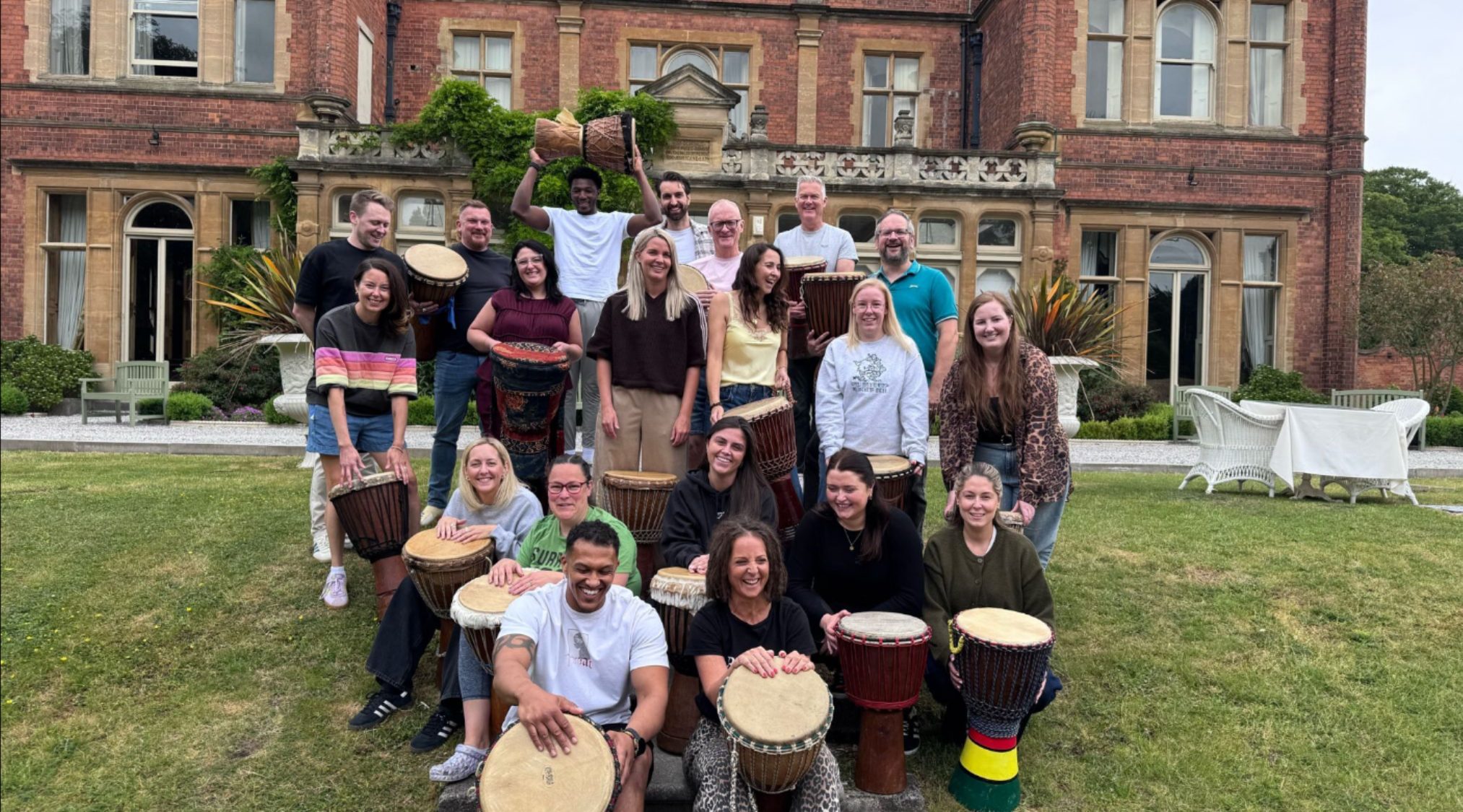
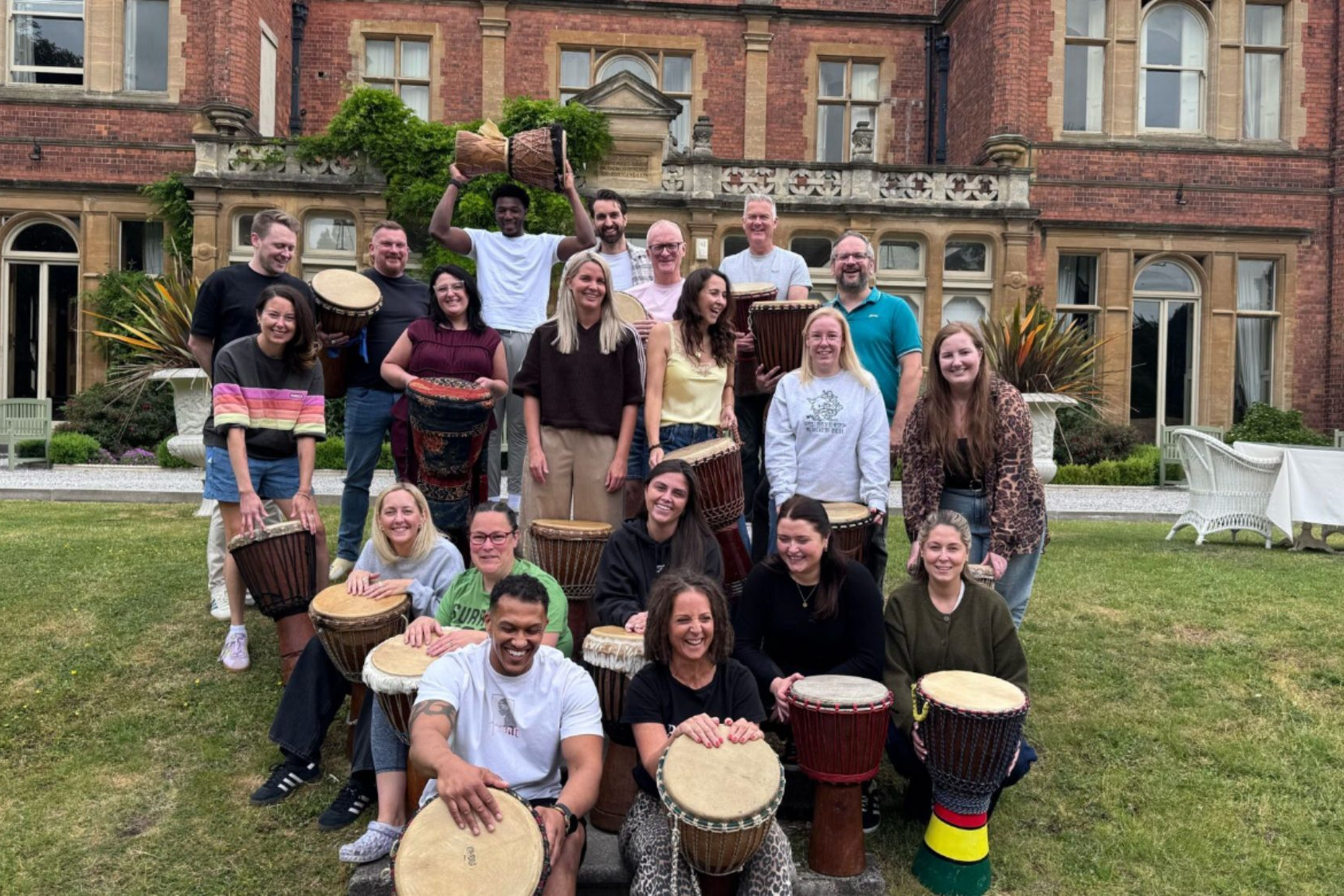
That was certainly the case for Timely Software, a global software company with teams based across New Zealand, the USA, Australia and the UK. As part of a company gathering at Rossington Hall in Doncaster, the UK team wanted a memorable way to start the day, create energy in the room and encourage genuine interaction between colleagues.
We were delighted to be invited to deliver an African drumming experience for the group as part of their event.
The Challenge
One of the biggest challenges facing modern organisations is that so much communication now takes place online.
Video calls, emails, messaging platforms and virtual meetings have made it easier than ever for teams to collaborate across different locations. However, when colleagues do have the opportunity to meet in person, those moments become especially important.
For Timely Software, the event wasn’t simply about bringing people into the same building. It was about creating meaningful interaction from the very start of the day and giving colleagues the opportunity to share an experience together.
Why African Drumming?
African drumming offers something that is increasingly rare in today’s working environment.
There are no screens, no presentations and no passive observers.
Instead, participants are actively involved from the very beginning, learning authentic African rhythms and experiencing the energy that comes from creating music together.
Our workshops are carefully structured so that participants learn simple rhythm patterns which gradually build and lock together. As the different parts combine, the room begins to fill with a powerful groove that everyone has helped to create.
No previous musical experience is required, making the activity accessible to everyone regardless of background or ability.
The Experience
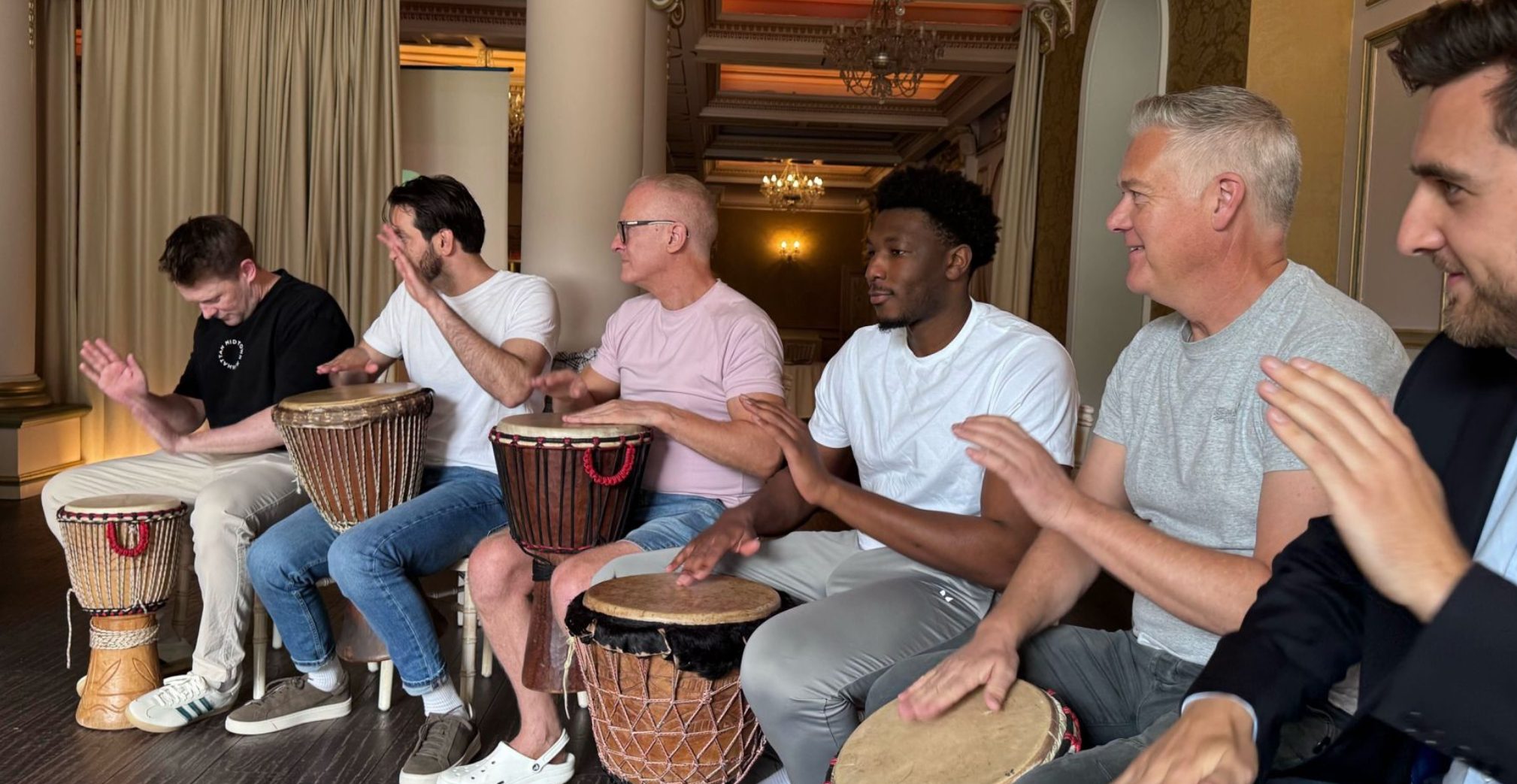
As the team arrived, they were welcomed by the sound of live drumming, immediately creating a sense of curiosity, excitement and anticipation.
Once everyone was seated with their own djembe drum, we guided the group through a series of rhythm-building activities designed to develop confidence, listening skills and participation.
Very quickly, the room became fully engaged.
What started as individual drum sounds developed into rhythms that worked together, creating something much bigger than any one person could achieve alone.
Alongside plenty of laughter and enjoyment, participants experienced the satisfaction that comes from learning something new and contributing to a shared musical experience.
Feedback from the Team
The response from both participants and organisers was overwhelmingly positive.
Sally Conchie, Marketing Specialist, Timely Software
“Steve kicked off our corporate event with so much energy and fun. He read the room from the get go, and had everyone fully engaged and participating in the African drums session. It was a fantastic way to highlight our key focus of communication in a fun and light hearted way. Steve was a pleasure to deal with throughout the process. Thank you!”
Meghan Woodney, Event Organiser, Timely Software
Although based in New Zealand and unable to attend the event in person, Meghan coordinated the booking and planning process.
Following the event, she shared the following feedback:
“The team told me the energy in the room was great, and your session played a major part in setting the tone for the day.”
“People have specifically called out the drumming experience as one of the highlights of the event. It brought people together, got everyone involved, and created exactly the kind of shared experience we were hoping for.”
She also highlighted the importance of having confidence in the event planning process:
“You made it very easy, and I felt very confident all would go to plan.”
Why it Worked
The success of the session wasn’t simply about playing drums.
It was about creating a shared experience that encouraged people to be fully present with one another.
In a world where so much communication takes place through screens, African drumming creates an opportunity for colleagues to interact face-to-face, listen, participate and connect through a common activity.
For organisations looking to bring people together at conferences, away days, leadership events or staff well-being days, this kind of experience can provide a memorable and energising start to the day.
Interested in African Drumming for Your Team?
Whether you’re planning a conference, team-building day, staff well-being event or company away day, African drumming can provide an engaging and memorable experience for your team.
We’d be delighted to discuss your event and explore how African drumming could work for your team.

African Drumming Workshops for Scouts, Guides, Beavers, Cubs, Brownies & Rainbows
African Drumming Workshops for Scouts, Guides, Beavers, Cubs, Brownies & Rainbows
African drumming is one of those activities that seems to bring people together almost instantly.
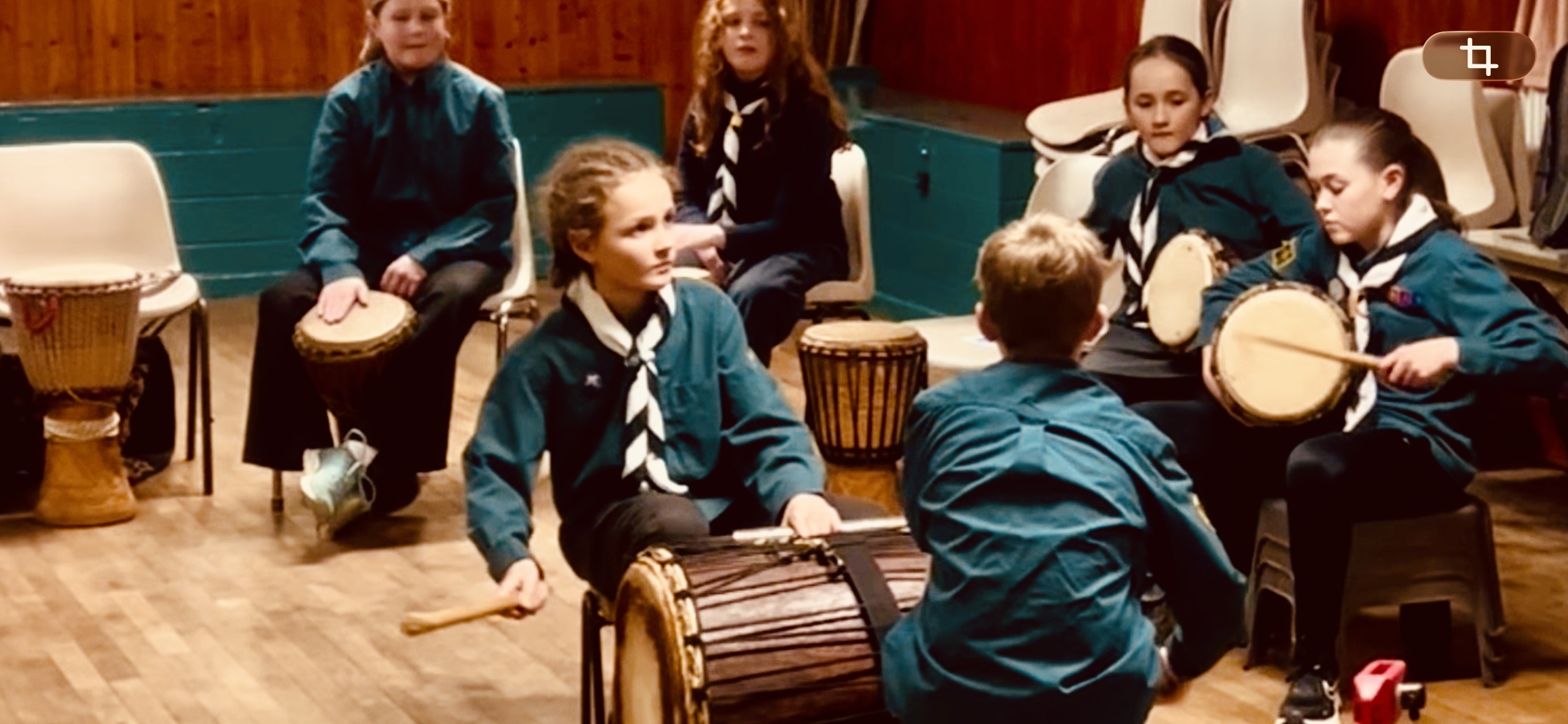
Whether we’re working with Beavers, Cubs, Scouts, Explorer Scouts, Rainbows, Brownies, Guides or Ranger units, the format is simple: everyone gets involved, everyone has their own drum, and everyone contributes to the music.
Watch the video below to see our workshops in action.
Unlike many musical activities, there is no need for any previous experience. Within minutes, young people are playing simple rhythms together and discovering how their individual part contributes to a much bigger musical picture.
Our workshops are inspired by the drumming traditions of West Africa. Participants learn authentic drum patterns and discover how different rhythms fit together to create exciting, energetic grooves. As confidence grows, we introduce bass drums, movement and simple African dance elements to help participants experience the music in a more complete and immersive way.
One of the things we particularly enjoy sharing is the connection between drumming, movement and community. In many West African celebrations, music is not something that happens on a stage while everyone else watches. Instead, people gather together, musicians and dancers interact, and everyone becomes part of the event.
We try to capture some of that spirit in our workshops by bringing participants together in a circle, creating space for movement and encouraging everyone to contribute to the shared experience. The result is often a wonderfully supportive atmosphere where young people gain confidence, work together and have a great deal of fun.
Types of groups we work with:
- Beavers
- Cubs
- Scouts
- Explorer Scouts
- Rainbows
- Brownies
- Guides
- Rangers
Types of events we can support:
- Weekly meetings
- Activity evenings
- Scout camps
- Guide camps
- District events
- County events
- Jamborees
- Family fun days
- Community festivals
- Celebration events
Because we travel with a full set of drums, many groups choose to combine sessions on the same evening to make the most of the visit. For example, we might deliver separate workshops for Rainbows, Brownies and Guides, or run consecutive sessions for Beavers, Cubs and Scouts.
This approach often helps spread costs while ensuring that each age group receives a workshop tailored to their needs and abilities.
Every workshop is fully inclusive, highly interactive and designed to get everyone involved from the very beginning. Leaders are always welcome to join in too – and often end up having just as much fun as the young people.
Thinking about booking an African Drumming Workshop?
The easiest way to receive a tailored quotation is to complete our Community Event Enquiry Form.
Tell us a little about your group, the type of event you’re planning, your preferred dates and approximate numbers, and we’ll recommend a suitable workshop format along with pricing information.
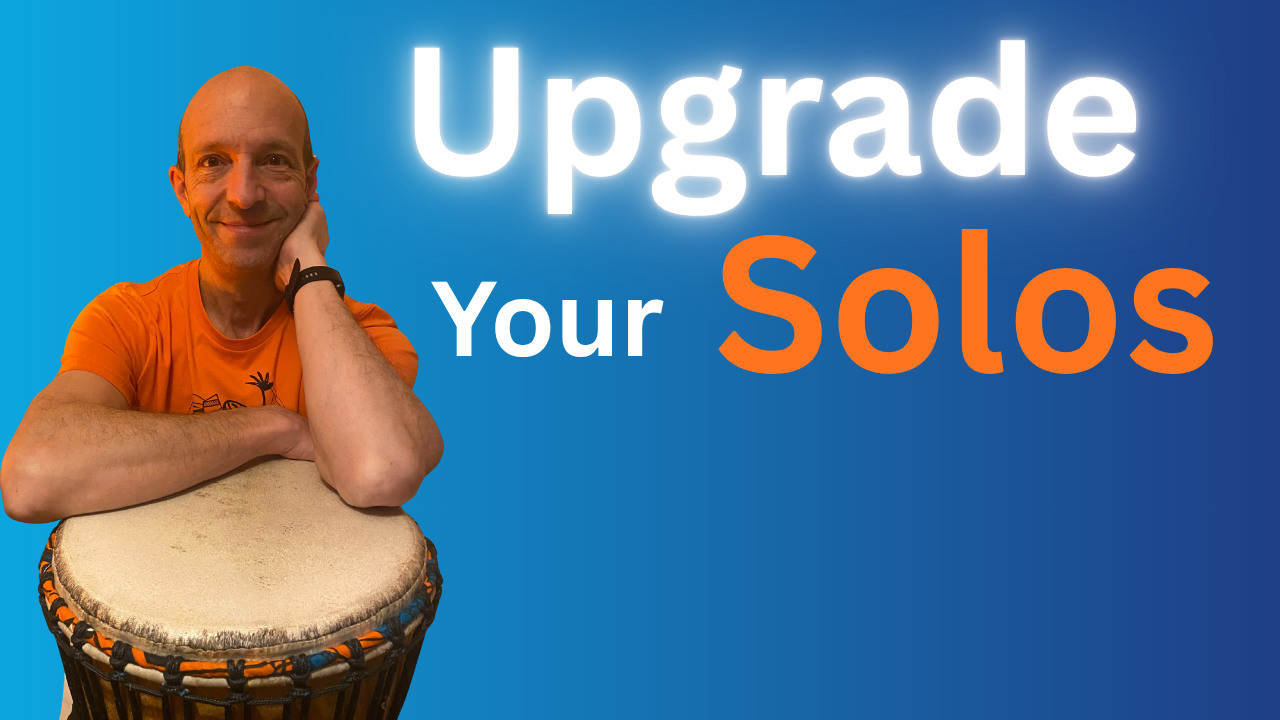
Djembe Solo Ideas: Developing One Phrase into Endless Possibilities
From One Djembe Phrase to Endless Possibilities: A Creative Journey in Solo Development
Five lessons exploring how a single Seckouba Oulare phrase evolved into a whole collection of djembe solo ideas.
If you’re enjoying my drumming tutorials and want to support future videos, you can buy me a coffee. Every contribution helps keep the rhythm going!
When learning djembe solos, many of us follow a familiar path. We learn one phrase, then another, then another. Before long, we may have accumulated dozens of patterns and ideas, each learned separately and stored away like items on a shelf.
There is absolutely nothing wrong with that approach. It is how many traditional solos are taught and how many players build their vocabulary.
However, this project explores a slightly different question:
What happens if you stop looking for the next phrase and spend more time with the one you already have?
Instead of constantly adding new material, what if you took a single phrase, learned it thoroughly, understood its movement and feeling, and then started asking where it might lead?
That is the idea behind this series.
The entire project began with a solo phrase played by Seckouba Oulare over the rhythm Djina Mansa. It was a phrase that immediately caught my attention. Not just because of the roll itself, but because of the way the phrase sat in the groove and seemed to pull the pulse in interesting directions.
What started as a simple lesson on one phrase quickly became something much bigger.
Each week, the phrase evolved. New possibilities emerged. Certain notes were emphasised. Others disappeared. The rolls changed shape. The groove shifted. New feelings appeared.
Rather than moving on to a completely different idea, each lesson explores another branch growing from the same musical root.
The exciting thing is that this journey is far from finished. At the time of writing, the project continues to develop, with new ideas still emerging from the original phrase.
Below you’ll find the first five stages of that journey.
Week 1: This Djembe Roll Phrase Instantly Upgrades Your Solos
Everything starts here.
The first lesson introduces the original phrase inspired by Seckouba Oulare’s playing over Djina Mansa. At first glance, it might appear to be a lesson about a roll. In reality, it is much more than that.
What makes this phrase so compelling is not simply the number of notes in the roll or the technical challenge involved. It is the way the phrase interacts with the pulse and creates momentum within the groove.
This lesson focuses on understanding the phrase itself, learning the mechanics required to play it, and beginning to appreciate why it has such a distinctive character.
Most importantly, it establishes the foundation from which the rest of the project grows.
Week 2: Djembe Roll Placement: Make It Swing
Having learned the original phrase, the next step is to take a closer look at one of its most distinctive ingredients: the roll itself.
One of the biggest challenges in djembe playing is recognising that notes alone do not create feel. Two players can perform exactly the same pattern and achieve completely different results depending on how they place those notes against the pulse.
In this lesson, the roll is isolated from the wider phrase and explored as a repeating idea in its own right. The focus shifts towards timing, placement and swing, while maintaining the same relationship to the pulse that gave the original phrase its character.
Subtle ghost notes help connect the roll to the underlying pulse, creating a sense of flow and repeatability. Rather than sounding like an isolated technical exercise, the roll begins to settle into a groove that feels natural and musical.
This is where the project starts moving beyond simply learning a phrase and towards
Week 3: Djembe Rolls with a Shuffle Feel
Week 3 marks the first major transformation of the original idea.
Instead of simply refining the phrase, we begin reshaping it into something new. The result is a flowing shuffle-like feel that changes the character of the phrase dramatically.
As the phrase loops continuously around the pulse, it develops a rolling momentum that feels quite different from the original version.
This lesson demonstrates an important principle in solo development. Sometimes the most interesting ideas do not come from inventing something completely new. They emerge when we view an existing phrase from a different angle.
The shuffle feel creates a fresh personality while still retaining a clear connection to the original source material.
Week 4: Djembe Rolls That Float Around the Pulse
The journey continues by pushing the shuffle concept even further.
Here, the roll clusters begin to move around the pulse in a way that creates a suspended, floating sensation. Rather than landing directly on strong beats, they seem to drift either side of them, producing a groove that feels simultaneously grounded and weightless.
This is one of the fascinating aspects of rhythmic development. Tiny adjustments to placement can completely alter the emotional quality of a phrase.
The lesson explores how these offbeat placements create tension, movement and release, while still maintaining a strong connection to the underlying pulse.
By this point in the project, the phrase has already traveled a considerable distance from where it started.
Week 5: African Djembe Flams & Shuffle Feel
Week 5 takes an unexpected turn.
Rather than adding complexity, it removes it.
Returning to the shuffle concept introduced in Week 3, the rolls are stripped away and replaced with loose African-style flams. The result is a completely different texture and feel.
These stretched flams occupy a fascinating space within djembe playing. At times they barely sound like conventional flams at all. Instead, they feel like two relaxed notes leaning gently into one another.
This lesson also explores an important musical idea: the danger of becoming overly dependent on ghost notes.
Ghost notes can be incredibly useful for demonstrating movement and swing. However, they can sometimes become a safety net. When they are reduced or removed entirely, the main notes are forced to carry more responsibility. Suddenly every note matters more. The groove becomes clearer. The phrasing becomes more deliberate.
In many ways, Week 5 represents a reminder that musical development is not always about adding more notes. Sometimes it is about discovering how much expression can be achieved with less.
What This Project Has Taught So Far
Although these five lessons explore different technical ideas, the deeper theme running through the entire series is creativity.
The original phrase has been examined from multiple angles:
- Learning the phrase itself
- Understanding its placement
- Developing swing
- Exploring shuffle feel
- Creating floating offbeat movement
- Replacing rolls with flams
- Simplifying the material to reveal new possibilities
Each stage has demonstrated how much potential can be hidden inside a single musical idea.
For djembe players, this can be a valuable lesson. We often assume progress comes from constantly learning new material. Sometimes it does. But there is also tremendous value in staying with one phrase long enough to truly understand it.
When we do that, the phrase begins to reveal possibilities we could never have seen at first glance.
The Journey Continues
One of the most exciting aspects of this project is that it is still evolving.
What initially looked like a short series has continued to generate new ideas and directions. New variations keep appearing. New questions emerge. New possibilities reveal themselves.
Week 6 is already underway, and there may well be further instalments beyond that.
That, perhaps, is the biggest lesson of all.
A great phrase is not simply something you learn and move on from. It can become the starting point for an ongoing creative journey.
If this series encourages you to spend a little longer exploring the possibilities hidden inside the phrases you already know, then it will have achieved exactly what it set out to do.
Watch the Full Playlist
The project continues to grow, and future lessons will be added as new ideas emerge from the original phrase.
Watch this space.
https://www.youtube.com/playlist?list=PLbH4A8OC0FDhJgU4hdOm63LTPwzcGiJTt
If you enjoyed this series please subscribe to the channel and explore the growing collection of djembe lessons, rhythm breakdowns and solo development ideas. https://www.youtube.com/@unbeatableenergy
☕ Enjoying the videos?
Support the channel here:
If you’re enjoying my drumming tutorials and want to support future videos, you can buy me a coffee. Every contribution helps keep the rhythm going!